1493 – H. Schedel – CCIIII
120 €
Titles: “CCIIII”
Description:
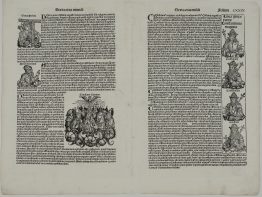
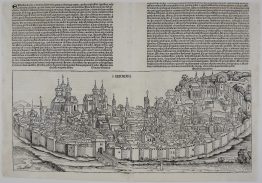
A densely illustrated leaf from Hartmann Schedel’s Latin edition of the “Liber chronicarum,” published in Nuremberg in 1493, carrying ten named figures across its two sides — bishops, crusader kings, a queen’s confessor, popes, and a celebrated medieval prophet.
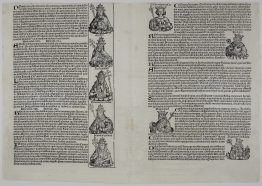
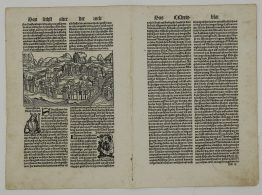
Recto (Folio CCIIII) opens with St. Hartmann, Bishop of Brixen (“Hartmannus”), shown with a child in his care, reflecting the account of his ascetic life and his work establishing a settlement on the Danube at the request of the Austrian margrave. Beside him, Amalric I, King of Jerusalem (“Almericus”), appears enthroned, illustrating his twelve-year reign and his campaigns into Egypt against Saladin, including the failed siege of Alexandria. Below, St. Albert of Beauvais is shown as a martyred knight with a palm frond, paired with Anselm, Bishop of Beauvais, remembered here for lamps said to have lit miraculously at his tomb. The lower register turns to France with Philip II Augustus (“Philippus rex Francor.”), whose long reign is tied to the fall of Jerusalem to Saladin and his brief participation in the Third Crusade alongside Richard the Lionheart, and closes with Elizabeth of Schönau (“Elizabeth monialis Saxonie”), the Benedictine visionary credited with the “Liber viarum Dei” (“Book of the Ways of God”).
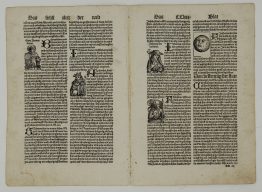
The verso continues the papal history under the heading “Linea summorum pontificum“: Lucius III, driven from a turbulent Rome to govern from Verona; Urban III, whose pontificate was darkened by the Christian defeat at Hattin and the loss of Jerusalem; and Gregory VIII, whose seven-week reign was spent calling Europe to a new crusade. The final entry profiles Abbot Joachim of Fiore (“Joachim abbas”), the Calabrian mystic famed for his prophetic commentaries on the Apocalypse and his writings against Peter Lombard, later condemned by the Church.
Page number CCIIII
Worth knowing about the book itself: almost none of the portraits are individual likenesses — the same “generic ruler” and “generic pope” woodblocks get recycled again and again throughout the Chronicle for whichever figure is being discussed. And the red-ink initials and headings are rubrication, added by hand after printing, which is typical for surviving copies.
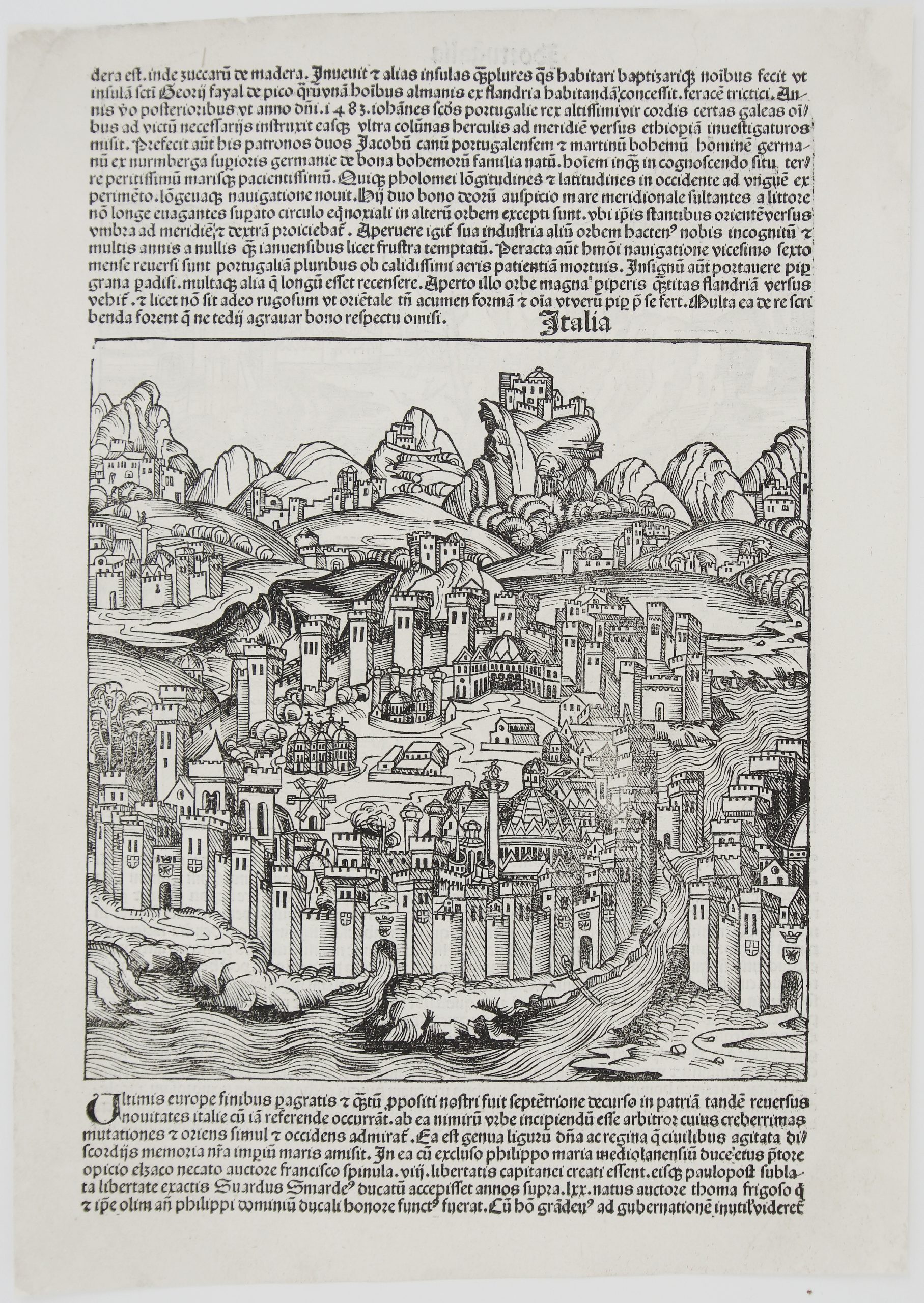
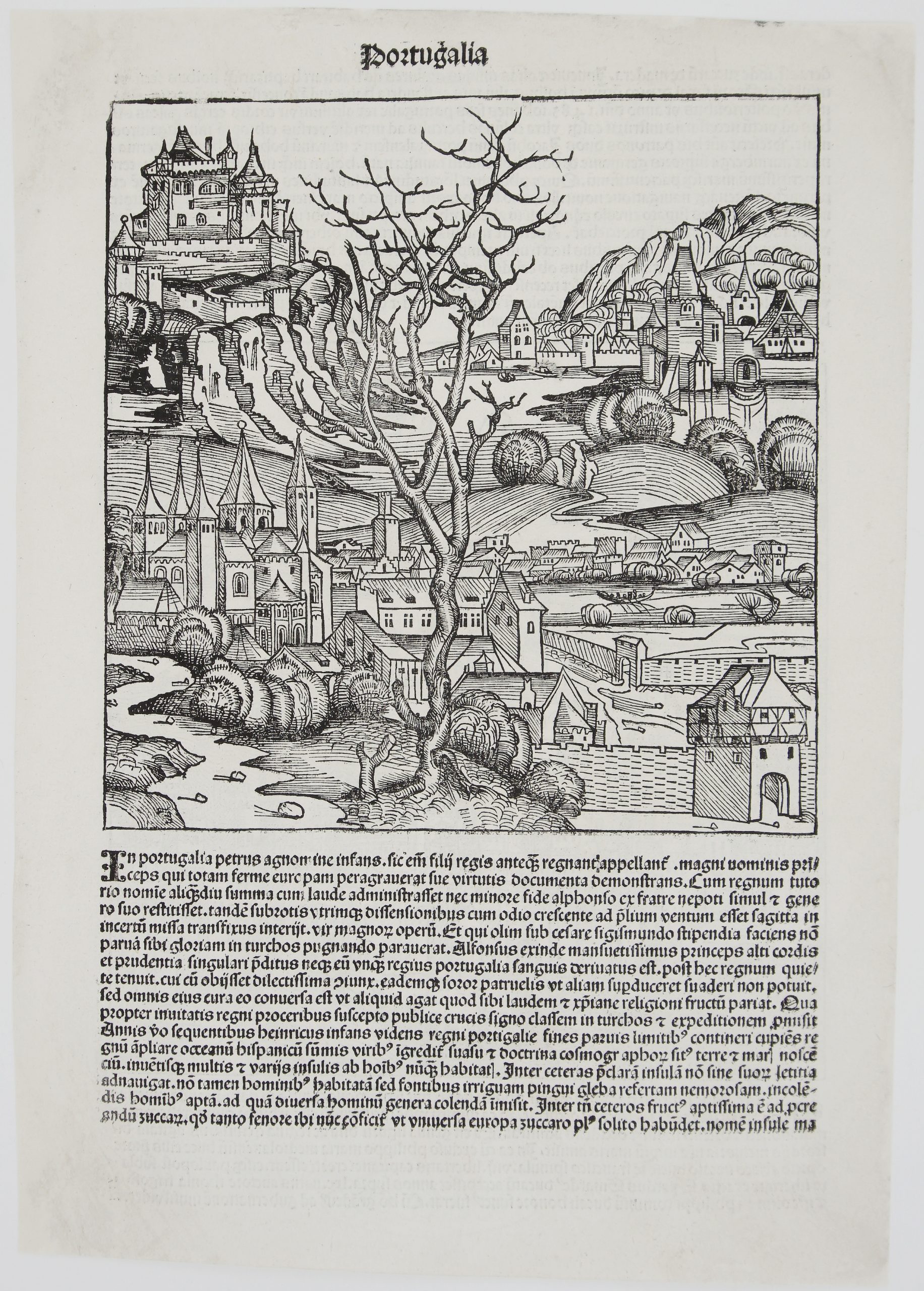
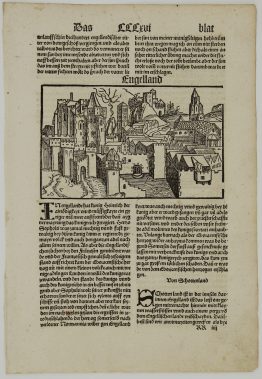
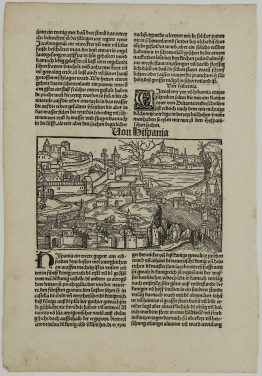
The Nuremberg Chronicles was the first printed history of the known world with about 2000 woodcuts the most picturesque work of the early time of printing. It became one of the most popular books of the 15th. century. The woodblock cutters were Michael Wolgemut, teacher of Albrecht Dürer and his stepson Wilhelm Pleydenwurff. The printing was carried out under the supervision of the great scholar-printer Anton Koberger.
Author: Hartmann Schedel (1440 – 1514)
Sheet size: 43,3 x 31,3 cm
Year: 1493
Technique: wood block
Condition:
In good condition.
This is an original antique map published in 1493 and NOT a modern copy or reprint
On your request I will provide a Certificate of Authenticity
In stock