1493 – H. Schedel – St Andrew and St Thomas
250 €
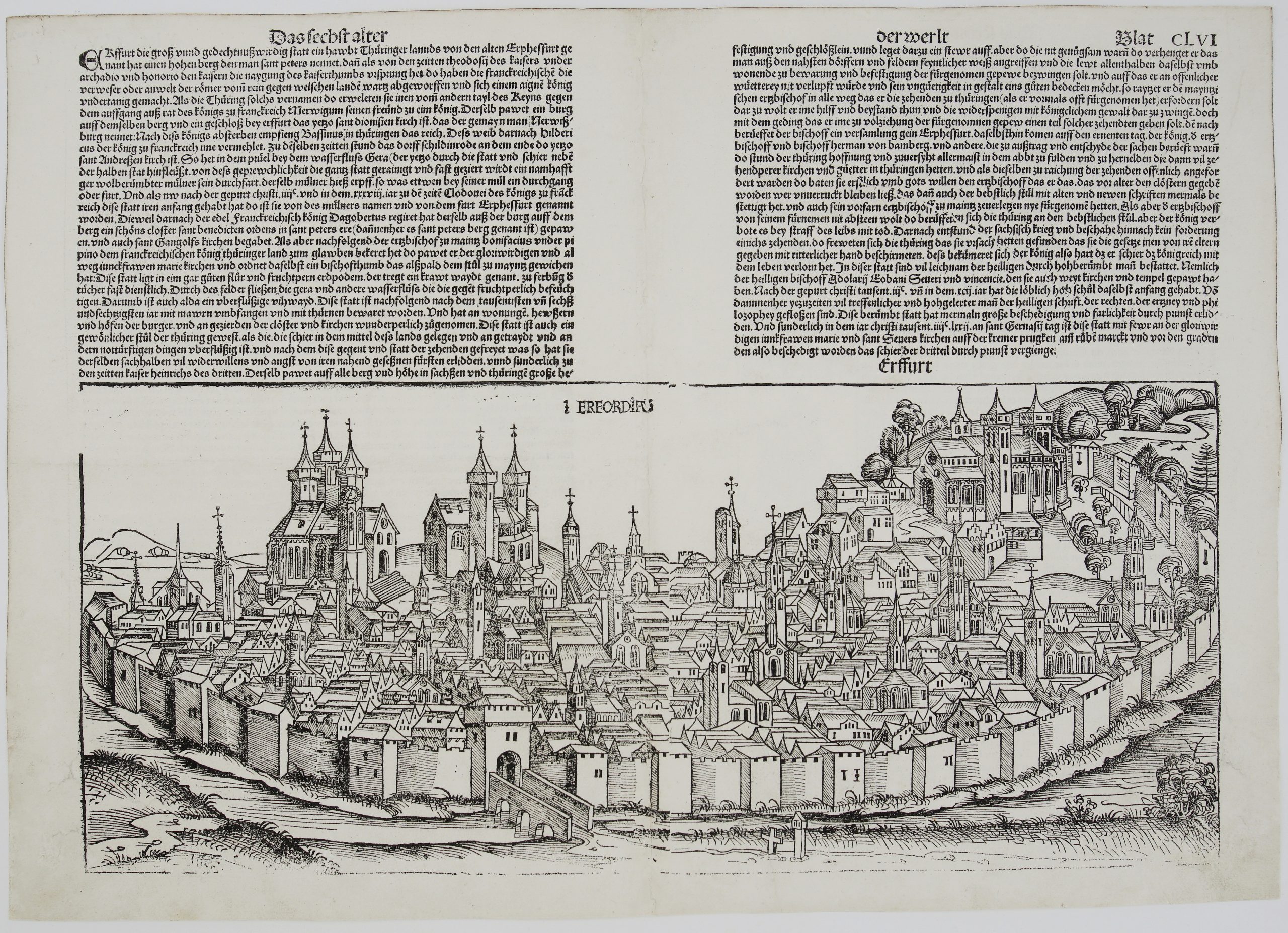
Page number: “CVI”
Description:
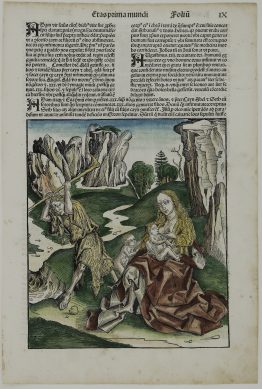
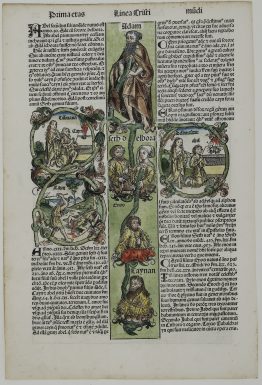
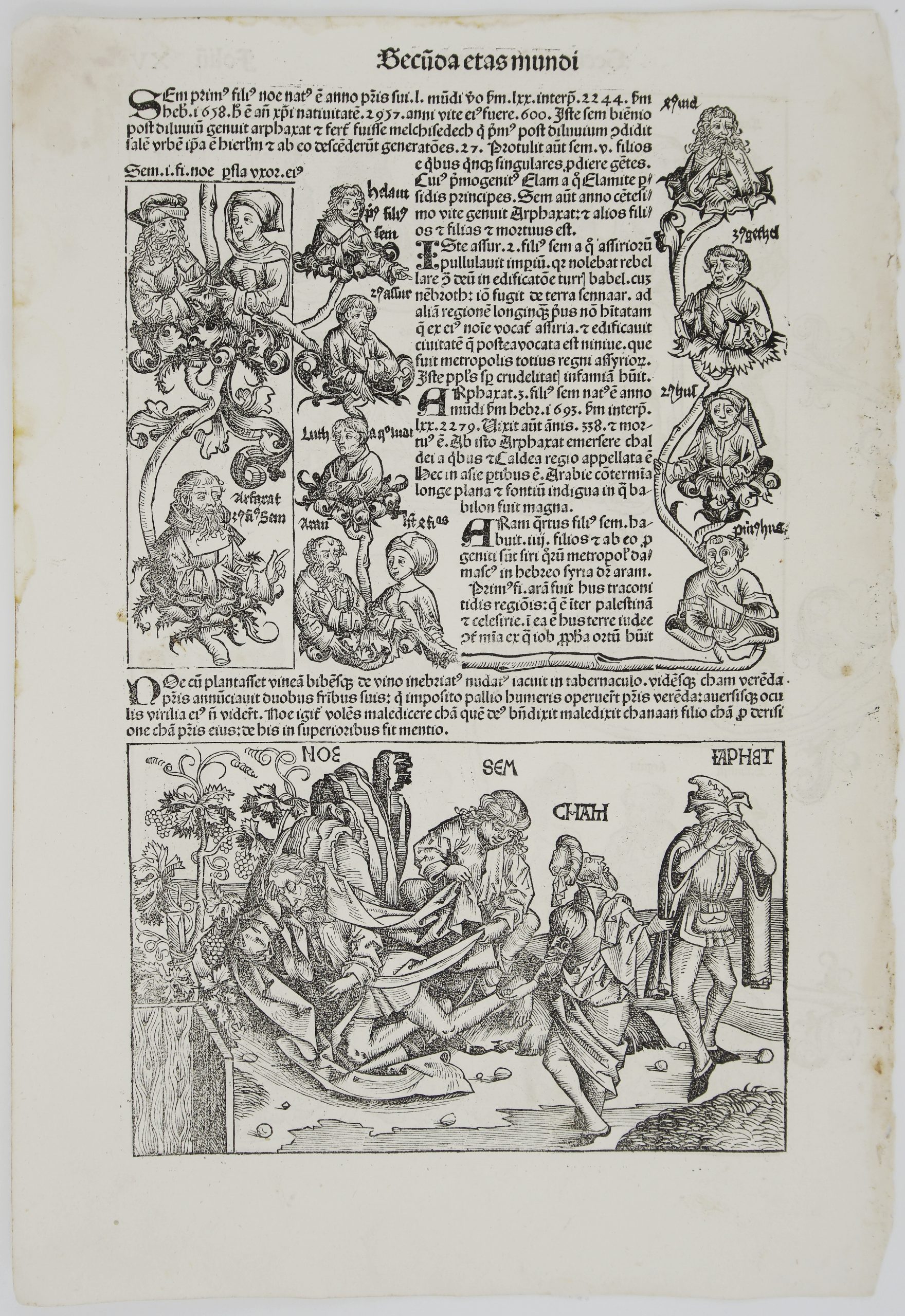
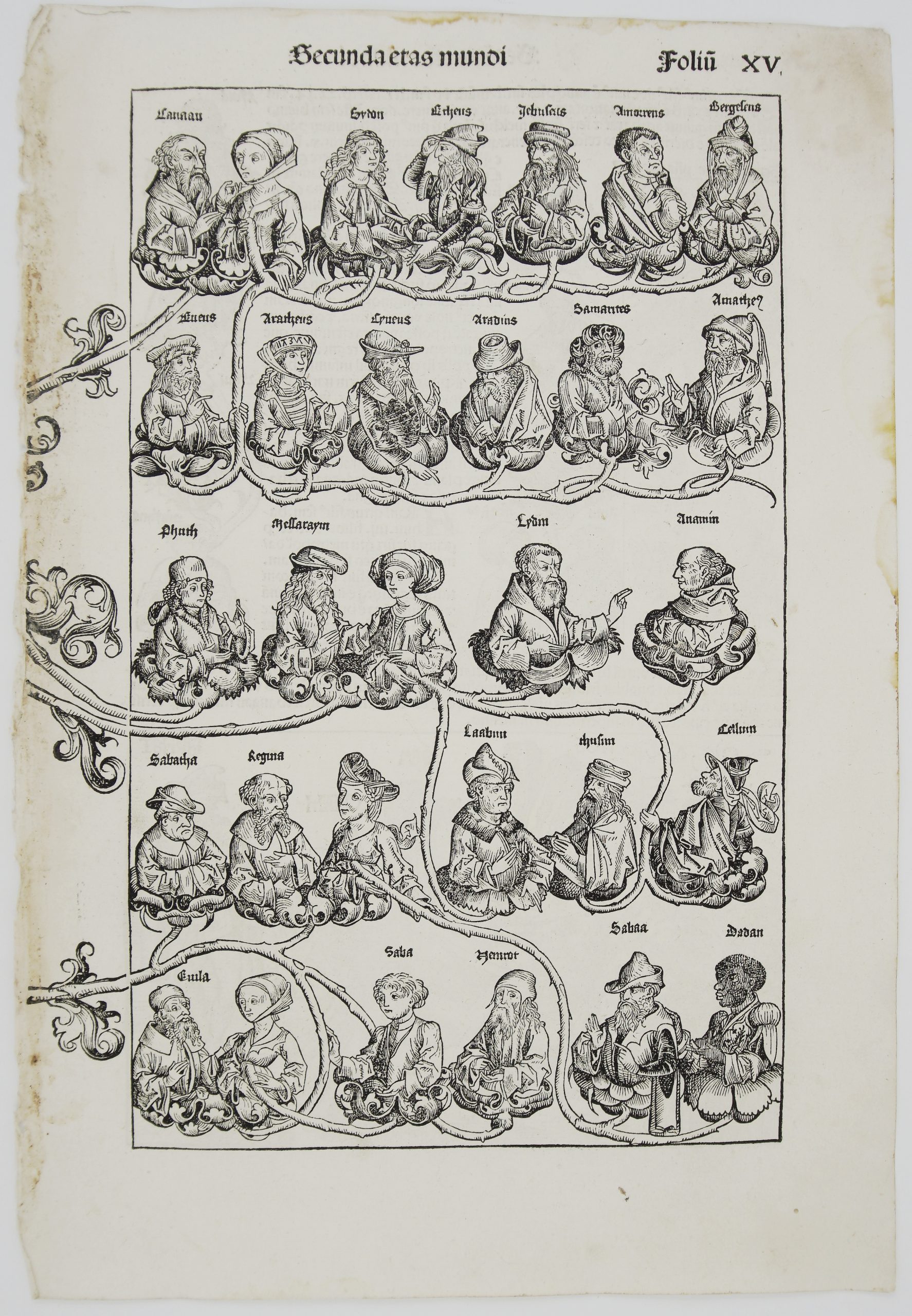
An original leaf from the German edition of Hartmann Schedel’s world chronicle, “Das Buch der Chroniken und Geschichten”, the famous Nuremberg Chronicle. Anton Koberger printed it in Nuremberg on 23 December 1493, five months after the Latin edition, in a German translation by Georg Alt. The Chronicle is the most lavishly illustrated book of the 15th century, with 1,809 woodcut illustrations printed from 645 blocks. They were made in the workshop of Michael Wolgemut and Wilhelm Pleydenwurff, where the young Albrecht Dürer had served his apprenticeship. This leaf is folio CVI (106), from the “Sixth Age of the World”, and its woodcuts are finely coloured by a contemporary hand.
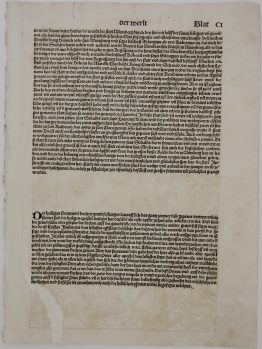
Recto (Blat CVI). Under the running title “der werlt”, a column headed “Linea der kayser” shows four crowned Roman emperors with sceptre and orb on a salmon-pink ground: Galba, Otho, Vitellius and Vespasian, the rulers of the “Year of the Four Emperors” (AD 69). Schedel gives each a lively portrait in words:
- Galba: bald, with a crooked nose and hands and feet so crippled by gout that he could neither wear shoes nor hold a book. He brought the orator Quintilian from Spain to Rome and was murdered at Otho’s instigation at the age of 73.
- Otho: after losing the fourth battle against Vitellius, he took his own life with a stab under the left breast.
- Vitellius: a notorious glutton who once had 2,000 fish and 7,000 birds served at a single dinner. He ended cut to pieces and thrown into the Tiber.
- Vespasian: he restored Rome and its finances, and on his deathbed declared that “an emperor should die standing”. He died as he rose, in the arms of those supporting him.
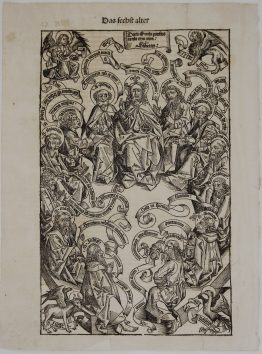
Verso. Under the running title “Das sechst alter” (the Sixth Age) are two large woodcuts of apostles’ martyrdoms:
- “Andreas der appostel”: St Andrew is tied to his cross at Patras by two executioners. The text tells how he greeted the cross (“Hail, holy cross, consecrated by the body of Christ”), lived two days upon it, and died on the last day of November. Maximilla, the wife of the governor Aegeas, buried him with fragrant herbs. His body was later taken to Constantinople, and Pope Pius II brought his head from the Peloponnese to St Peter’s in Rome (in 1462, only a generation before the Chronicle was printed).
- “Thomas der appostel”: St Thomas is struck down with sword and lances. The text says his doubt “served us more than the faith of Magdalene”, since he witnessed the Resurrection by touch. He preached to the Parthians, Medes, Persians, Hyrcanians and Brahmins and converted many in “upper and lower India”. He survived being thrown into a burning furnace, and was finally pierced with lances by the priests of a sun idol whose pillars had broken at his prayer. Schedel even adds a sceptical note: the legend that the Virgin gave Thomas her girdle “is not supported by credible writings”.
Between the two scenes, a portrait of “Quintilianus” accompanies a short life of the great Roman teacher of rhetoric, with his maxim that a soft upbringing “breaks the sinews of mind and body”. The text adds that his books on the art of oratory, lost for almost six hundred years, were found complete by the Florentine humanist Poggio Bracciolini in a monastery during the Council of Constance and brought to Italy.
A beautifully coloured leaf from the most famous illustrated book of the incunable period, combining two dramatic martyrdom scenes with a gallery of Roman emperors.
Artist: Hartmann Schedel (1440 – 1514)
Publisher: Anton Koberger
Sheet size: 30,4 x 45,5 cm
Year: 1493
Technique: wood block
Condition:
Good condition compare to the age, contemporary coloring. Slight traces of foxing, browning and wear. Small split in top margin.
This is an original antique map published in 1493 and NOT a modern copy or reprint
On your request I will provide a Certificate of Authenticity
In stock