1493 – H. Schedel – St Benedict and Monte Cassino
160 €
Page number: CXLIIII
Description:
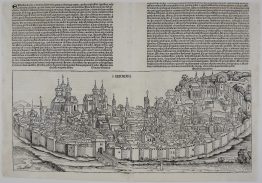
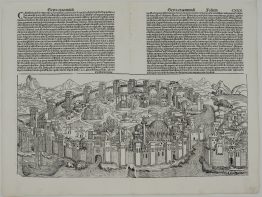
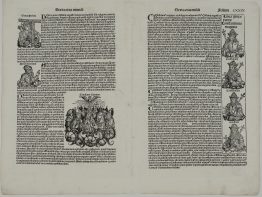
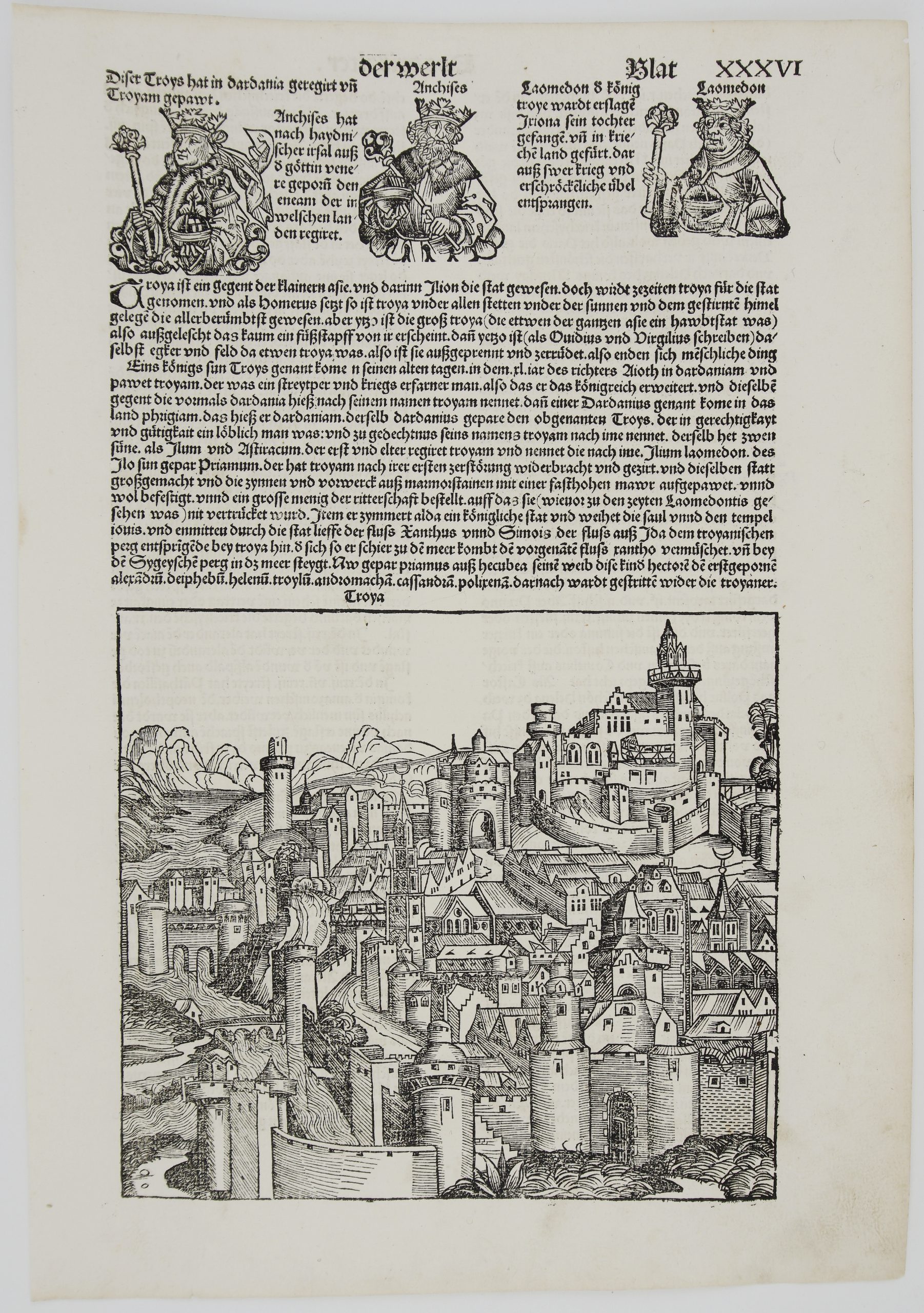
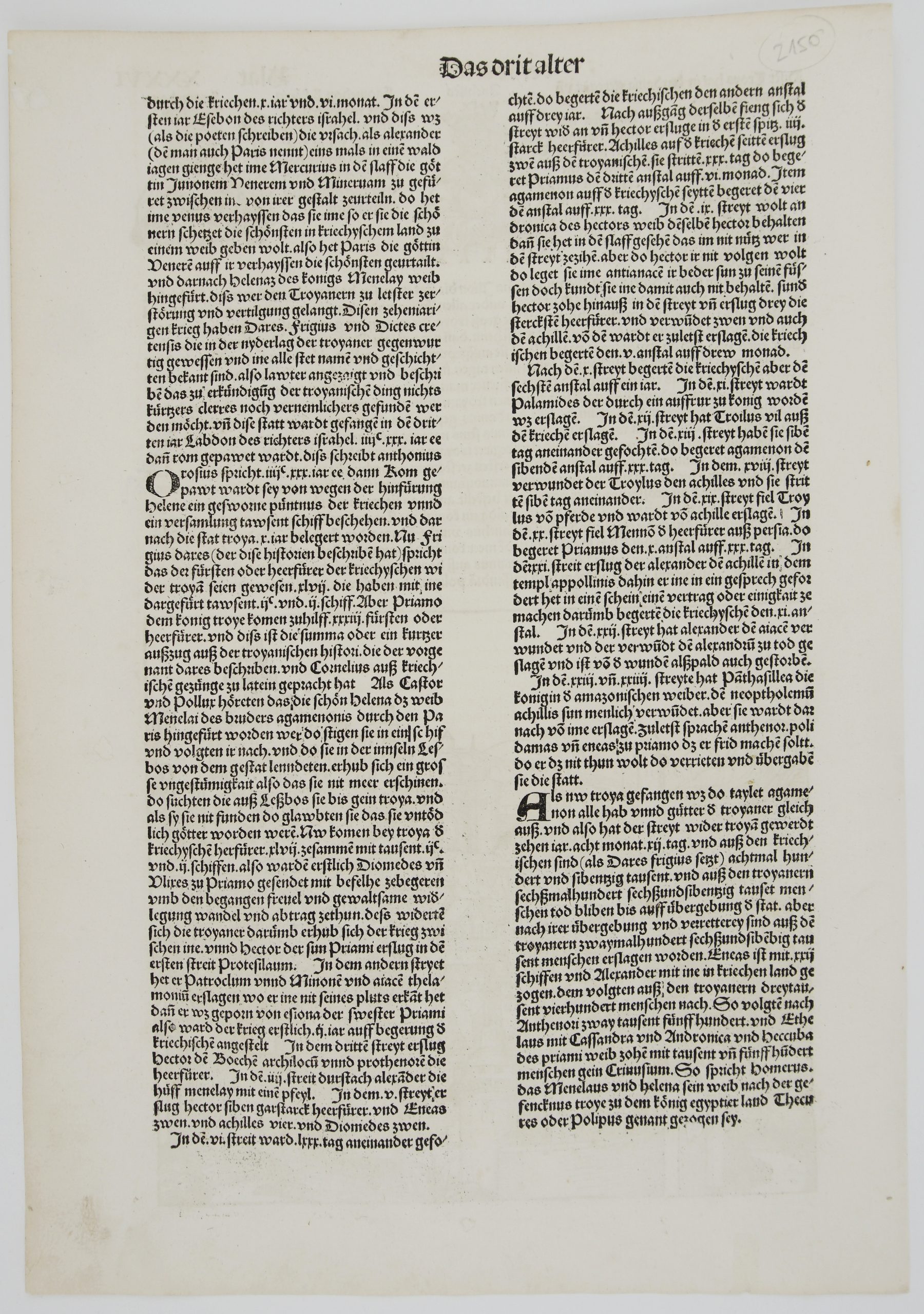
An original leaf from the first, Latin edition of Hartmann Schedel’s “Liber Chronicarum”, the famous Nuremberg Chronicle, printed in Nuremberg by Anton Koberger on 12 July 1493. The Chronicle is the most lavishly illustrated book of the 15th century, with 1,809 woodcut illustrations printed from 645 blocks. They were made in the workshop of Michael Wolgemut, the teacher of the young Albrecht Dürer, and his stepson Wilhelm Pleydenwurff. Folio CXLIIII (144) belongs to the “Sixth Age of the World” and is dedicated to St Benedict, the father of Western monasticism.
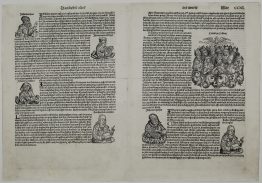
Recto (Folium CXLIIII).
- St Benedict. A tall woodcut of “Benedictus abbas” shows him in his monk’s habit with his abbot’s crozier, holding a book on which stands the poisoned cup, his traditional attribute. The text follows the life written by St Gregory the Great. Benedict was born of a noble family at Nursia and studied in Rome, then fled the world to live for three years in a cave at Subiaco, known only to the monk Romanus. He finally founded the famous abbey of Monte Cassino. Schedel retells his miracles: a glass of poisoned wine shattered when he made the sign of the cross over it, and he saw through Totila, king of the Ostrogoths, who sent his servant dressed in royal robes to test him.
- Monte Cassino. A large woodcut of “Monasterium Cassinense”, the walled abbey on its hilltop, accompanies a history of the Benedictine order. The text covers its branches (Cluniacs, Cistercians “greatly increased by St Bernard”, Camaldolese, Celestines, Olivetans) and the reform movements of Santa Giustina in Padua (1409), Melk and Bursfelde. It ends with the order’s proud statistics: 24 popes, 183 cardinals, 1,464 archbishops and bishops, 15,070 notable abbots and 5,555 canonised monks.
- St Scholastica. A portrait of “Scolastica”, Benedict’s sister, dedicated to God from childhood. The text tells the famous story of their last meeting. When Benedict wished to return to his monastery, she prayed, and such a storm of rain and lightning broke out that he could not leave, so they spent the whole night in spiritual conversation. Three days later he saw her soul rise to heaven in the form of a dove, and he buried her in the tomb he had prepared for himself, “so that those whose minds were always one in God should not be parted in the grave”.
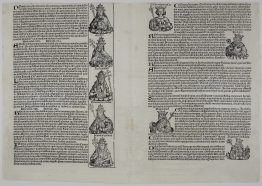
Verso. A column headed “Linea summorum pontificum” holds five woodcut portraits of the popes of the 6th century, Boniface II, John II, Agapetus I, Silverius and Vigilius, with their lives. The text is a dramatic chapter of church history in the age of Justinian and the Empress Theodora:
- Agapetus I travelled to Constantinople on behalf of the Gothic king, deposed the heretical patriarch Anthimus and died there; his body was brought back to Rome in a lead coffin.
- Silverius was deposed at the instigation of Theodora and Belisarius’s wife Antonina, falsely accused of plotting to betray Rome to the Goths, and exiled to the island of Ponza, where he died.
- Vigilius was dragged through Constantinople with a rope around his neck, kept in prison on bread and water, and died at Syracuse on his way back to Rome.
A handsome leaf for collectors of monastic and church history, with three of the Chronicle’s most appealing woodcuts: St Benedict, Monte Cassino and St Scholastica.
Artist: Hartmann Schedel (1440 – 1514)
Publisher: Anton Koberger
Sheet size: 31,5 x 44,2 cm
Year: 1493
Technique: wood block
Condition:
Very good condition.
This is an original antique map published in 1493 and NOT a modern copy or reprint
On your request I will provide a Certificate of Authenticity
In stock